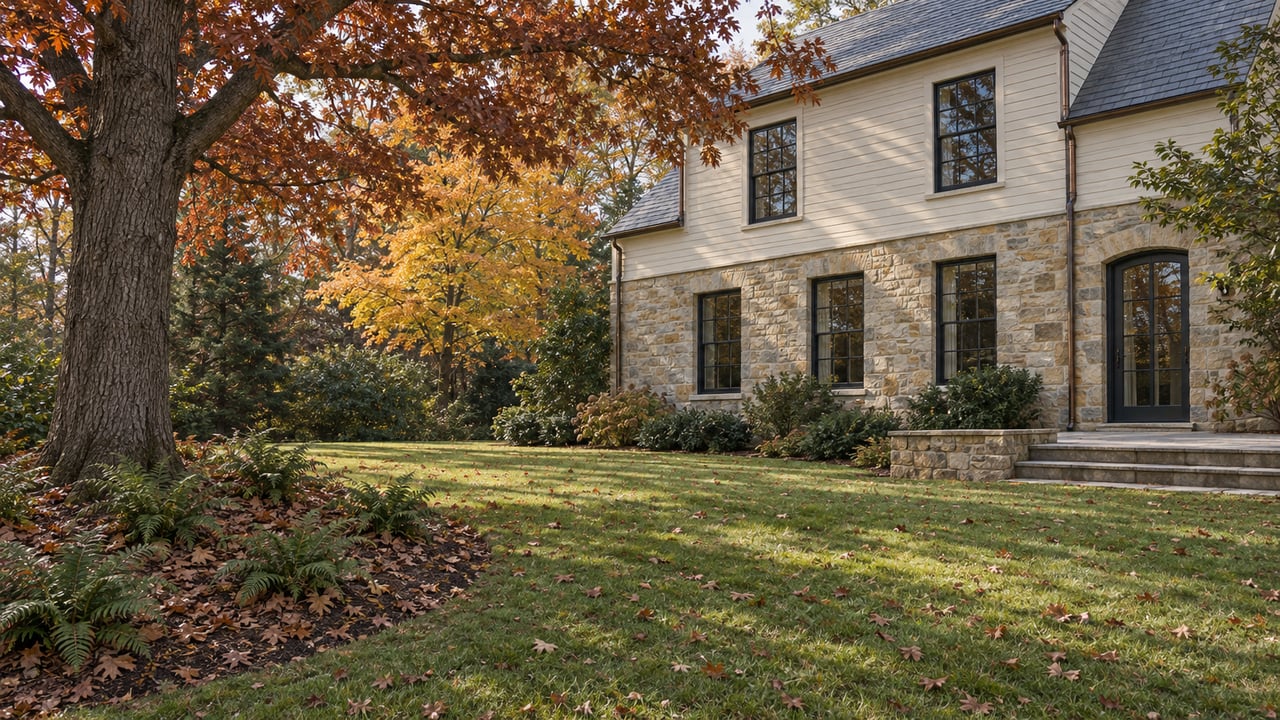
Fox Chapel's leaf vacuum trucks have been working the borough's roads since Tuesday, October 13. They don't follow a street-by-street schedule. Crews make a full pass through the borough, then go back to the first street and start again, and they keep that loop going into December. On Monday, November 30, the final pass begins. Once a crew has collected on a road on or after that date, it won't come back, and leaves put at the curb afterward stay there.
Five days after announcing that schedule, the borough posted a second notice with a different goal. This one asks residents to give the trucks less to pick up.
A Leaf Service the Borough Would Like You to Use Less
The Leave the Leaves Pledge, posted October 5, 2026, comes from the Fox Chapel Borough Park Commission. The commission says it wants to cut back on leaf collection "to benefit our environment and local ecosystem." People who sign agree to leave leaves where they fall, rake them into wooded areas, or mulch them instead of raking them to the curb. Borough trucks still drive every street, but they pick up only leaves that are piled.
The campaign isn't new. In its October 28, 2024 roundup of Herald-area news, TribLive reported that the Park Commission was running the same pledge that fall. The paper also said borough officials described any leaves taken out of the collection program as "a sustainable solution." According to the same report, the commission expected the environmental benefits and cost savings to be "significant." It also hoped to "give back" with a celebration and recognition event if enough residents signed on. The 2026 notice asks residents to spread the word to friends and neighbors, so the campaign's success depends on how many households join.
It helps to know how the borough describes the cost of leaves in the street. The collection notice says wet leaves in the roadway get soggy from runoff, which makes vacuuming harder and slows crews down. They also narrow the road for drivers and pedestrians. Every pile that never reaches the curb is one less stop on a route that already loops the whole borough more than once.
How the Trucks Work Between Now and November 30
For any leaves you do send to the curb, the borough's Fall Leaf Collection notice sets the rules.
- Behind the curb, not on it. Put leaves on the lawn behind the curb or road edge. The borough won't collect leaves left on the pavement or in the gutter.
- Six feet or closer. Because of equipment limits, crews can't reach piles set more than 6 feet from the curb.
- Keep the street clear. Piles blocked by cars parked on the street are skipped.
- Leaves only. Brush and decorative grasses aren't part of the collection.
- Check the log. Public Works keeps a daily record of streets collected and posts it on the borough website every Friday afternoon during the collection season.
- Tell your landscaper. The borough asks residents to let landscapers know about the cutoff and to keep leaves off the street.
The notice also cites Article III of the Borough Code, which sets a $1,000 penalty for anyone who puts these materials on the road. This summarizes the borough's published notice and is general information, not legal advice. If you have questions about how the code applies to your property, contact the borough directly.
Where the Leaves Go Instead
The pledge offers three options: leave them in place, move them into the woods, or mulch them. Two credible sources explain the reasoning, and they disagree on one practical point.
Penn State Extension says leaf litter shelters firefly larvae and other insects, plus birds, reptiles, amphibians and small mammals. The Xerces Society points out that most butterflies and moths spend the winter in the landscape as eggs, caterpillars, chrysalises or adults, and leaf litter gives them insulated cover. The disagreement is about what to do with leaves on a lawn.
| Question | Penn State Extension | Xerces Society |
|---|---|---|
| Shred or keep whole? | Run a mulching mower over leaves that are fairly dry and not too thick. A regular mower also works. | Keep leaves whole so insects still have cover. |
| On the lawn | A shredded layer up to about ½ inch helps the grass. | A thin layer can help grass. |
| In beds and around trees | Spread shredded leaves 2 to 4 inches deep around trees, shrubs and perennial beds. | Move leaves to garden beds, around trees, or to a designated area, where they suppress weeds and hold moisture. |
| Main benefit | Organic matter and nutrients go back into lawn and soil. | Habitat for overwintering insects, plus better soil. |
The choice depends on the goal. Mowing leaves into the lawn feeds the grass. Raking them whole into a bed or a corner of the yard keeps the insect cover in place. Either way, the pile stays off the curb.
One Penn State caution matters on a lot of Fox Chapel properties. The pledge invites residents to rake leaves into wooded areas, but Penn State warns against heaping extra leaves on top of an existing woodland leaf layer, because that can upset its natural depth. Spreading leaves along the edge of the woods respects both pieces of advice better than dumping one big pile in a single spot. Xerces adds a related tip for garden beds: perennial seed heads left standing feed goldfinches and other birds, and the hollow stems shelter insects.
The Same Commission Is Building Habitat on Purpose
The pledge makes more sense next to the rest of the Park Commission's work. Its December 8, 2025 meeting agenda included an update on Bird Town, Pennsylvania, with a $1,000 program grant, along with updates on the 10 Million Trees Program and a tree-management program. In the borough's Winter 2025 newsletter, Park Commission member Jeffrey Beyer described planting native trees and pulling invasive plants along Hidden Falls Trail with more than two dozen Shady Side Academy students. The same newsletter listed the commission's annual Clean Up Day and Garlic Mustard Pull.
So the commission plants native trees on public trails, joins a bird-habitat program, and pulls invasives. The leaf pledge carries that work onto private yards. The cover Penn State and Xerces describe for fireflies, moths and ground-feeding birds is exactly what goes into a borough truck when leaves get raked to the curb.
Neighboring towns handle leaves differently. O'Hara Township runs zoned curbside collection. Indiana Township's Fall/Winter 2025 newsletter describes monthly yard-waste pickup, with leaves taken in biodegradable bags. Fox Chapel offers both a vacuum service and a written request to use it less.
Beechwood Farms Puts the Idea on the November Calendar
If you want help with what to do with your leaves, Beechwood Farms Nature Reserve at 614 Dorseyville Road is close by. The Audubon Society of Western Pennsylvania's Fall/Winter 2026 bulletin lists a month of programs that tie in with the pledge. Here they are in date order, through the end of leaf season:
- Through Saturday, October 31. The Fall Tree and Shrub Sale is still running for its last few days, with 25% off native trees and shrubs for members and 15% off for nonmembers.
- Saturday, November 7. The Members' Sale and Holiday Shopping Kickoff runs 9 a.m. to 5 p.m. at the Beechwood Farms Nature Store. That evening, the Owl Prowl runs 7 to 9 p.m. Attendees learn about local owls, meet a live screech owl, and then look for owls on the trails. Registration is required, and the cost is $10 for members and $15 for nonmembers.
- Thursday, November 12. Fledglings, for ages 3 to 5, runs 10 to 11:15 a.m. This month's theme is "Leaf Man."
- Saturday, November 14. The Winter Seed Sowing Workshop runs 11 a.m. to 1 p.m. Participants sow eight high-wildlife-value native species to take home. It's free, but registration is required.
- Thursday, November 19. Hawks Up Close runs 6 to 7:30 p.m. and ends with a visit from one of Audubon's Hawk Ambassadors. The cost is $10 for members and $15 for nonmembers.
- Saturday and Sunday, November 21 and 22. The Holiday Eco-Market runs 10 a.m. to 4 p.m. both days, with Santa there from 1 to 4 p.m.
- Saturday, November 28. The Christmas Bird Count Warm Up with Coffee and Bagels runs 10 a.m. to noon. It includes a classroom session and a short bird walk, and it's free.
Two days later, the borough's final leaf pass begins. After leaf season, Audubon's online Certified Backyard Habitat Lunch and Learn on Wednesday, December 9, from noon to 1 p.m., covers how native plants, brush piles and seed heads help wildlife get through winter. The cost is $6 for members and $12 for nonmembers.
If you want to join, the pledge form is linked from the borough's notice.
Thinking about selling your Fox Chapel home in the coming year? Zita Billmann helps homeowners plan the outdoor prep for a listing, including mulched beds, native plantings and wooded edges, well before photos are taken. Request a Free Home Valuation, and we can start with your yard.